 Save Our Pak
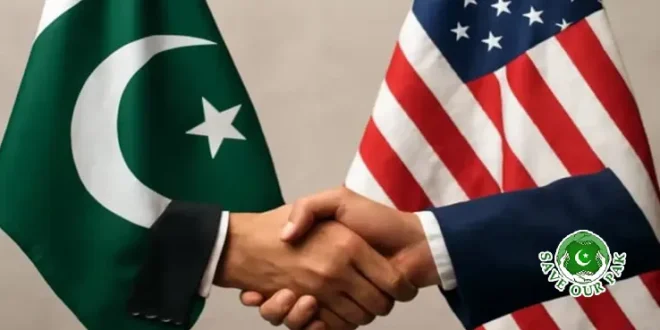
Islamabad (December 22, 2025): After a surprising change in former President Donald Trump’s policy toward Pakistan, Washington’s long-standing “India First” approach has ended, with Pakistan now gaining clear priority in US foreign policy.
According to an article published by The Washington Times, the year 2025 has been described as a turning point in Pakistan–US relations. The report highlights a major shift in Washington’s strategy following Trump’s unexpected change in stance toward Pakistan, officially closing the chapter on the “India First” era.
The article links this policy shift to the brief but intense Pakistan–India conflict that took place in May this year. It also includes a detailed analysis of the growing relationship between Pakistan’s Field Marshal Asim Munir and the US president.
The Washington Times called Pakistan’s rapid image rebuilding in Washington a rare and unique development. The report stated that Pakistan is no longer viewed as an unfriendly state but is now seen as a strategic partner of the United States.
The article further explained that Pakistan has become a central pillar of America’s South Asia policy. Initially, Washington planned to strengthen India through platforms like the Quad while keeping Islamabad on the sidelines. However, that approach has now changed.
Concerns over India’s internal politics, restrictions on personal freedoms, uneven military performance, and rigid diplomacy reportedly led Washington to question India’s role as a regional stabilizer.
According to The Washington Post, the first sign of warming ties came through intelligence sharing on counterterrorism. This exchange sent a strong signal to Washington about Pakistan’s willingness to cooperate. In March, Trump’s unexpected public praise of Pakistan further shifted US policy. Islamabad used this moment wisely, turning limited cooperation into growing strategic trust. Over time, engagement increased, and relations moved from transactional to strategic.
The decisive moment came during the short but intense Pakistan–India clash. Pakistan’s military performance reportedly surprised Trump, as US officials found Pakistan’s discipline, strategic clarity, and operational capability far beyond expectations. From that point onward, Pakistan was again taken seriously as a key regional player.
Following the May conflict, The Washington Times noted that Trump’s strategic map of South Asia was redrawn, with Pakistan emerging as an anchor state in the region. Pakistan’s military modernization gained global attention, command structures were reformed, and the position of Chief of Defence Forces became active. Field Marshal Asim Munir’s leadership as Army Chief was also widely praised.
The article stated that India’s reaction to the ceasefire did not sit well with Trump, while Pakistan accepted US mediation with appreciation. As a result, Field Marshal Asim Munir emerged as a prominent figure within Trump’s inner circle. Their relationship was informally described as a “bromance,” with Munir being referred to as a disciplined dark horse and a deliberate mystery.
The report also called the White House lunch meeting unprecedented for a Pakistani military chief. Field Marshal Asim Munir received a red-carpet welcome at CENTCOM headquarters and held high-level strategic discussions with US military leadership. According to the article, Pakistan and its military leadership played a key role in reshaping US policy and redefining the balance of power in South Asia.
The Washington Post predicted that by early 2026, Pakistan would be seen close to the core of Trump’s grand strategy. Pakistan is expected to serve as a credible channel to Iran, play a potential role in Gaza-related diplomacy, and remain a visible regional actor. The “India First” phase in Washington is now considered over, though the long-term success of the new US policy will depend on the future behavior of both New Delhi and Islamabad.
Reported by Save Our Pak