 Save Our Pak
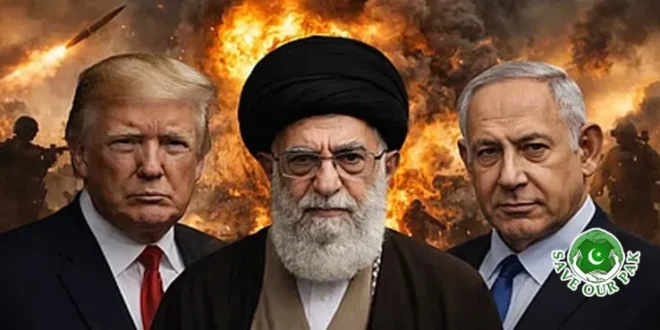
Islamabad: Tensions in the Middle East are rising quickly after recent airstrikes by the United States and Israel on Iran. The situation has become more serious with each passing day, and many people around the world are now asking a big question: who will eventually win this conflict, and how long will it last?
On one side, the United States and Israel are using their military strength to target Iran. On the other side, Iran has responded strongly to these attacks. Its response surprised many observers and analysts, leaving the global community wondering how this conflict will unfold.
These views were discussed in ARY News’ program “Sawal Yeh Hai.” International affairs expert Dr. Adil Najam shared his analysis of the current situation and explained the possible outcomes of the war.
Dr. Najam said that the information currently coming from international media should be treated carefully because it may not always be fully reliable. He pointed out that statements from political leaders sometimes change quickly. As an example, he mentioned former U.S. President Donald Trump, who has made different claims about the conflict at different times.
When asked how long Iran could continue to face both the United States and Israel at the same time, Dr. Najam said it is difficult to predict. He also expressed surprise about the number of missiles Iran appears to possess. According to him, it raises questions about where these weapons came from.
Dr. Najam shared his personal opinion that countries like Russia or China might be quietly supporting Iran in some way behind the scenes, although there is no clear public confirmation of this.
When discussing the question of who might win the conflict, Dr. Najam suggested that Israeli Prime Minister Benjamin Netanyahu may have already achieved some of his long-standing goals. He said Netanyahu has been trying for decades to push for strong action against Iran, and in that sense he may feel that his objective has been reached.
However, Dr. Najam also explained that the overall situation remains very complex. He believes Iran may not be able to achieve a clear victory in the war, but at the same time it may also be very difficult to defeat Iran completely. According to him, Iran considers this a fight for its survival and will likely continue resisting for as long as possible.
Speaking about the United States, Dr. Najam said that political decisions and advice from allies may have placed former President Trump in a difficult position. He explained that once a country becomes deeply involved in a conflict, stepping back becomes very challenging.
He added that recent statements suggesting that the United States was never aiming for “regime change” might show that goals in the conflict are shifting.
Dr. Najam also noted that public opinion in the United States is beginning to question the purpose of the conflict. Some Americans are asking why their soldiers should risk their lives in a war that many believe is not directly related to their country’s interests.
As the conflict continues, the situation in the region remains uncertain. Analysts believe that the coming weeks will be crucial in determining how the war develops and what its long-term consequences might be.
Reported by Save Our Pak