 Save Our Pak
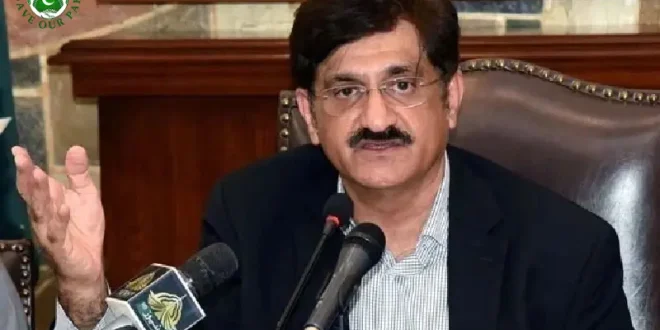
Sindh Chief Minister Syed Murad Ali Shah has presented the provincial budget for the fiscal year 2025–26. The total budget size is Rs 3,451.87 billion, which is 12.9% higher than last year’s estimate of Rs 3,056.3 billion.
While presenting the budget, Murad Ali Shah said that the people of Sindh have shown their trust in the Pakistan People’s Party. He announced relief for government employees—stating that workers from grade 1 to 16 will get a 12% salary increase, and employees from grade 17 to 22 will receive a 10% raise along with an ad-hoc relief. Pensions will also be increased by 8%, and transport allowance for differently-abled employees will be raised.
The budget focuses on key areas like education, health, infrastructure, and welfare. A total of Rs 2,149.4 billion has been allocated for current expenditures, compared to Rs 1,912.36 billion in the previous year.
Big Boost for Education
The education budget has been increased by 12.4%, now standing at Rs 523.73 billion. This makes up 25.3% of the total current spending. Primary education funds have grown from Rs 136.2 billion to Rs 156.2 billion, and secondary education funds increased from Rs 68.5 billion to Rs 77.2 billion.
The government will hire 4,400 new teachers and staff. Four IBA community colleges will be established, and over 34,100 primary schools will be given separate budgets. Rs 2 billion has been allocated for the Sindh Educational Endowment Fund to support talented but poor students.
The budget for the Differently-Abled Persons Development Program has been raised from Rs 11.6 billion to Rs 17.3 billion. This will be used for assistive devices, scholarships, and partnerships with NGOs.
Health Sector Sees Growth
A total of Rs 326.5 billion has been allocated for healthcare, which is 8% more than last year’s Rs 302.2 billion. Out of this, Rs 146.9 billion will go to various health units as grants. The Sindh Institute of Urology and Transplantation (SIUT) will receive Rs 19 billion, and Rs 16.5 billion will be given to the People’s Primary Health Initiative (PPHI).
A new hospital worth Rs 10 billion will be built in Larkana, and ambulance and mobile diagnostic units will be expanded to rural areas.
Development and Infrastructure
Due to expected drops in federal transfers, the Annual Development Program (ADP) has been reduced by 20%, now limited to Rs 520 billion. Despite this, 475 new development schemes will be launched, focusing on flood-hit areas, clean water, sanitation, and renewable energy.
For education, Rs 99.6 billion has been allocated under ADP; Rs 45.37 billion for health; Rs 73.9 billion for irrigation; and Rs 132 billion for local governments.
Special Focus on Karachi
Karachi’s development has been given top priority in this budget. Funds have been reserved for infrastructure upgrades, including road repair, sewage systems, and clean water supply. The city’s transport system will be expanded with 50 new electric buses, and 100 more will be added by August 2025.
Progress has been made on the BRT Yellow Line and Red Line (which is more than 50% complete). The Safe City Project will be extended with smart CCTV cameras and wider surveillance coverage. The budget also includes funding for the Korangi Causeway Bridge and Shahrah-e-Bhutto improvements.
New schemes for restoring heritage sites, improving business areas, and building important roads are also part of the development program.
Digital Governance & Transparency
The budget introduces new digital tools to improve governance. A central KPI monitoring dashboard will track progress, and land records will be moved to blockchain for more transparency. A new digital birth registration system will be launched and linked with education and health data. The goal is to cover 100% of registrations by 2028.
Support for Farmers
The budget focuses heavily on agricultural reforms. Over 200,000 farmers will receive subsidies and modern farming equipment under the Benazir Hari Card. Subsidies will also be given for drip irrigation. Cluster farming projects will be started through public-private partnerships.
A feasibility study has begun for launching the Sindh Cooperative Bank to offer interest-free loans to progressive farmers.
Welfare and Social Programs
School budgets will be directly sent to headteachers for easier spending. Special facilities will be created for differently-abled individuals, new rehabilitation centers will be opened, and scholarships will be increased.
Youth Development Centers will be set up across Sindh. To reduce financial burden on citizens, the government has announced the removal of five different taxes, including professional tax and entertainment duty. Motor vehicle tax will be reduced, and a new “negative list” system will simplify sales tax collection.
Final Remarks by CM Murad Ali Shah
The Chief Minister emphasized unity and teamwork to lead the province and country toward peace and progress. He called the budget a complete and well-rounded plan. He reiterated the 12% ad-hoc relief for grades 1 to 16, 10% for grades 17 to 22, and confirmed an 8% increase in pensions. Special grants will also be given to support lawyers, journalists, minorities, and differently-abled workers.